

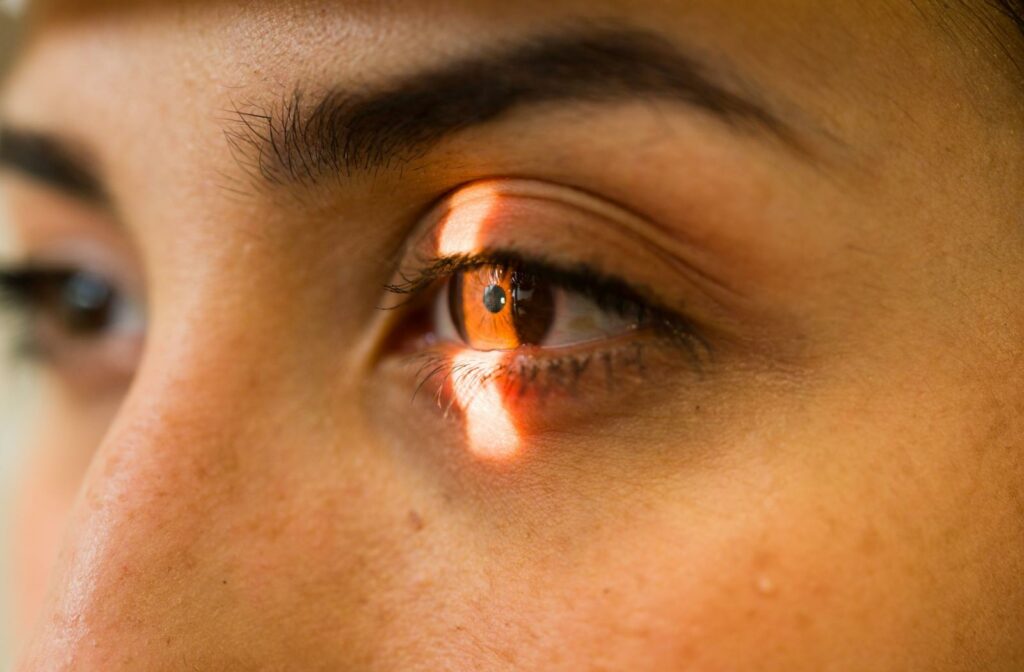
You schedule your annual check-ups to stay on top of your health, but you might not realize just how much your eyes can reveal about your body. With innovative technology, we are able to see more and more of the inside of your eye, which helps provide our team at Integrated Eyecare with a detailed map of your unique health.
The optomap® by Optos scan gives your eye doctor a detailed, comprehensive view of your retina at the back of the eye, helping to detect early signs of eye diseases and even other health conditions you may not know about.
A Quick Look at Your Eye’s Health
The optomap® retinal scan is an ultra-widefield image of your retina, which is the light-sensitive tissue at the back of your eye. This gives your eye doctor a much wider view than traditional retinal imaging methods can offer, covering about 82% of your retina in a single image.
This detailed picture becomes a permanent part of your health record. It helps our team to track changes over time, creating a baseline for your eye health. Comparing images from year to year helps them spot subtle shifts that might otherwise go unnoticed.
Detect Eye Conditions Early
Glaucoma and Macular Degeneration
The scan provides a clear view of your optic nerve (which sends signals to the brain) and macula (which is responsible for your central vision). This is helpful for detecting signs associated with conditions like glaucoma, which affects the optic nerve, and age-related macular degeneration (AMD). Catching these conditions early gives you more options for eye disease management.
Retinal Tears and Detachments
Your retina is a delicate tissue, and issues such as tears or holes can sometimes develop, especially at the outer edges. The wide view of an optomap is excellent for inspecting the sides of your retina. Detecting a retinal tear early can help prompt timely treatment and may reduce the risk of more serious retinal complications.
Floaters and Other Concerns
Almost everyone experiences floaters, which are those little specks that you can sometimes see drifting across your vision. While they’re usually harmless, a sudden increase in floaters can sometimes point to an underlying issue. An optomap scan can help determine what may be going on.
Detect Early Signs of Diabetes and High Blood Pressure
Your eyes are the only place on your body where blood vessels can be viewed directly, completely noninvasively. This gives your eye doctor a unique window into your circulatory system, which moves blood throughout your body. The optomap can reveal tiny changes in the retinal blood vessels that are often associated with early stages of diabetes or high blood pressure.
The scan can show small leaks, swelling, or bleeding in these delicate vessels. These signs can appear even before you experience other symptoms, making regular eye exams a key part of managing your overall health.

Uncover Clues of Other Health Issues
Multiple Sclerosis
The optic nerve connects your eye to your brain. Inflammation of this nerve can be one of the first signs of multiple sclerosis (MS). Though an optomap scan can’t diagnose MS, it can detect changes in the optic nerve that may warrant further investigation.
Other Systemic Conditions
The retina can show clues about more than just your eye health. Changes in the blood vessels or other parts of the retina can be linked to high cholesterol. This makes the optomap a valuable tool for gaining a perspective on full-body health.
Why Add an Optomap to Your Exam?
Adding an optomap scan to your comprehensive eye exam is a simple step that can provide significant benefits. In many cases, optomap imaging can reduce the need for dilation, though your eye doctor may still recommend dilated pupils when clinically necessary. Most of the time, you just look into the device, see a quick flash of light, and it’s done.
This scan gives your optometrist in Bend a powerful tool to monitor your health with precision. The digital record it creates is invaluable for comparing your eyes from one year to the next, making an optomap scan a proactive way to care for your vision and your overall wellness.
Ask for an Optomap at Your Next Eye Exam
Our team at Integrated Eyecare is dedicated to providing you with thorough and comfortable eye care. If you want to see the bigger picture of your health, ask about adding an optomap to your next exam. Schedule your appointment today to get a clear view of your eye health.